


Connect incoming demand, workforce planning, dispatch, field execution and back-office follow-up through one service lifecycle.
Logistics and field-service operations are won or lost in the handoffs between demand, scheduling, assignment, execution and back-office completion.
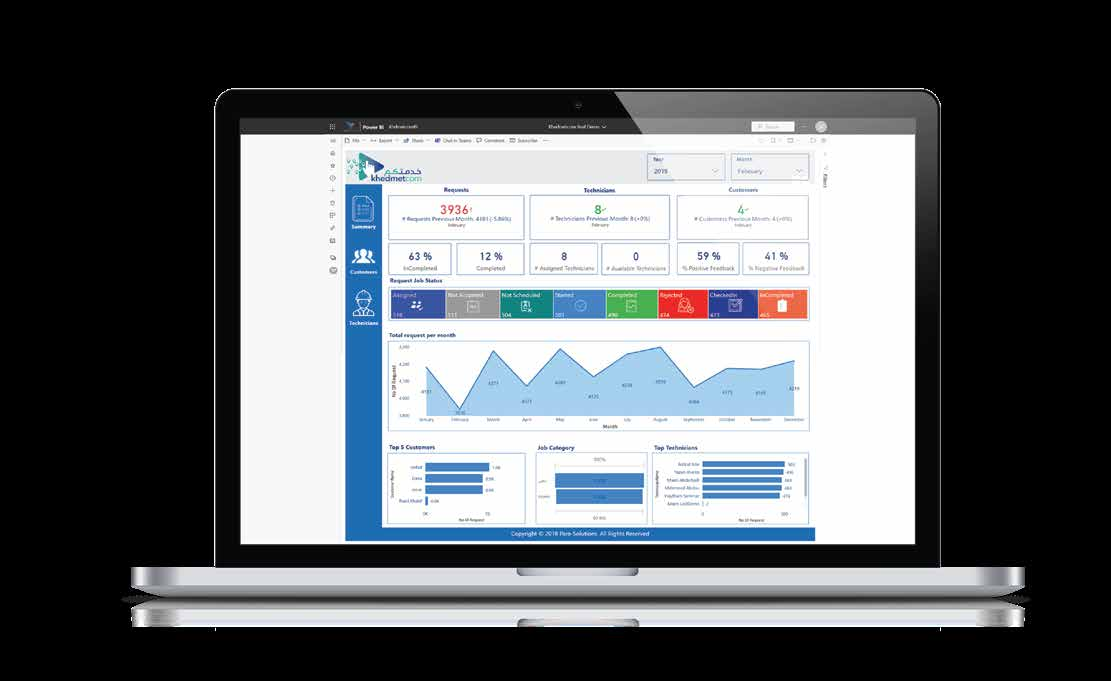
Para's KhedmetCom / FSM product provides the product anchor for this industry. The documented value themes include dispatch and scheduling efficiency, technician utilization, first-time-fix support, field productivity, service-job revenue context and reduced administrative effort after work is completed.
Para can connect the product to customer, asset, finance, inventory or other enterprise systems where the service lifecycle crosses platform boundaries.
Field service improves when the dispatcher, technician and back office are working from the same service context.

Why this matters
Field-service teams often manage demand, schedules, technician availability, work status, timesheets and invoicing across different tools or manual handoffs.
A scheduling screen alone does not solve that problem. The service request has to carry the right customer, job and operational context into the field, while the result needs to return to the back office without rework.
KhedmetCom / FSM provides the service-execution layer, while Para integration and analytics capabilities can connect it into the wider enterprise environment.
This creates a clearer industry proposition for service organizations, logistics operations and any business that depends on distributed field teams.
- Service-demand and work-request capture.
- Planning, scheduling and technician/workforce assignment.
- Dispatch and field-execution visibility.
- Service history and context to support better assignment and first-time-fix decisions.
- Completion, timesheet and back-office follow-up.
- Operational reporting around demand, capacity, productivity and service performance.
Field Service Lifecycle
Demand / Work Request
Plan & Schedule
Dispatch & Assign
Field Execution
Completion & Back Office
Service Insight
What the work looks like
Map the end-to-end service lifecycle
Para documents how demand enters the operation, who plans the work, how assignments are made, what the field worker needs and what happens after completion.
This identifies the handoffs that should be handled by the product and the ones that require integration with surrounding enterprise systems.
Define scheduling and assignment context
The operating model identifies the information needed to select the right resource, such as availability, service context, location or skill where those factors are part of the approved scope.
The goal is to make dispatch more informed without embedding unnecessary complexity into the product.
Put useful context into the field experience
Technicians need enough information to understand the work, service history and required action without returning to separate back-office systems for every decision.
Mobile or field interfaces should therefore be shaped around the actual execution task.
Close the loop with the back office
Completion status, technician time and service records need to flow back into the processes responsible for billing, reporting or further action where required.
This reduces the gap between work completed in the field and work still waiting in administration.
Use service data to improve the operation
Once the lifecycle is connected, management can monitor demand, schedule adherence, workload, repeat work and other approved service measures.
The reporting layer becomes a tool for operational improvement rather than a separate analytics project.
Para point of view
Service process before scheduling feature
The workflow from demand to completion should drive product configuration.
The technician needs context, not just a task
Better service execution depends on giving the field worker the information required to complete the job.
First-time-fix begins before the visit
Assignment quality, service history and preparation influence whether the right person arrives with the right context.
Back-office effort is part of field-service cost
Timesheets, work-order review and invoicing should be considered in the same lifecycle as field execution.
Operational data should feed improvement
Service status and history can help management identify recurring bottlenecks and capacity issues.
What you get
Service-lifecycle assessment
Demand, planning, scheduling, dispatch, field execution, completion and back-office processes.
KhedmetCom / FSM scope
Users, roles, workflow, scheduling/assignment requirements and service data in the approved product scope.
Integration design
Connections to customer, asset, finance, inventory or other systems where required.
Field experience requirements
The information and actions technicians need to execute the service.
Operational reporting model
Priority measures and management visibility around the service lifecycle.
Rollout and support plan
Configuration, integration, release, adoption and ongoing support requirements.
Where it fits
Logistics & Field Services is the industry entry point for KhedmetCom / FSM and the Para capabilities that surround it.
KhedmetCom / FSM
Product anchor for planning, assignment, field execution and service visibility.
Customer Service
Service-request capture and customer-facing status where required.
B2B Applications
Partner or subcontractor workflows where field delivery crosses organizational boundaries.
Modern Apps & Integration
Connections to existing CRM, ERP, asset, finance or operational systems.
Data, BI & Reporting
Service and workforce visibility for management follow-up.
Explore related capabilities
Related advisory
- Service Process Advisory
- Enterprise Architecture & Roadmapping
- Integration Advisory
- Operational Resilience
Related solutions
Related platforms & assets
- Field-service lifecycle patterns
- Integration patterns
- Service reporting patterns
Need to connect the field team with the planning and back-office processes around the work?
Talk to Para about the service lifecycle, workforce model and existing systems. The engagement can start with one field process and define how KhedmetCom / FSM and the surrounding architecture should work together.